AmCham China Head Says Leader Summits Alone Cannot Anchor US-China Relations
AmCham China warns that Trump-Xi summits alone cannot anchor US-China relations. AI rivalry and trade uncertainty remain key concerns for American businesses.
As Donald Trump and Xi Jinping conclude what has been described as an unprecedented year of diplomatic engagement, the head of the American Chamber of Commerce in China has cautioned that the relationship between the two superpowers cannot be built on bilateral summits alone, flagging artificial intelligence rivalry and a short-lived trade truce as unresolved pressure points for American businesses operating in China.
The warning, delivered in Shenzhen on 20 November 2026, underscores the unease felt by US companies in China even as top-level diplomacy between Washington and Beijing has reached a tempo not seen in recent years. AmCham China’s leader said the frequency of Trump–Xi meetings this year, while notable, does not by itself provide the kind of durable, rules-based clarity that businesses require to plan and invest with confidence.
A short trade truce, an open AI rivalry
The AmCham head flagged the current trade truce between the United States and China as a particular concern, describing it as short-term in nature. American businesses, the official said, need predictability on tariffs and market access rather than arrangements that could unravel between one summit and the next.
Artificial intelligence was identified as a second flashpoint. The divergence between the two countries on AI — encompassing technology access, export controls and competing visions for how the technology should be governed — was cited as a source of mounting tension that leader-level meetings have not resolved. The remarks align with broader discussions at the Asia-Pacific Economic Cooperation gathering held in Shenzhen, where AI and technology competition featured prominently alongside trade.
Businesses calling for greater clarity on trade rules
US companies in China are calling for clearer and more stable rules governing trade and technology, according to AmCham China. The chamber’s position is that diplomatic progress at the leadership level needs to be translated into institutional arrangements and consistent policy frameworks that businesses can rely on day to day.
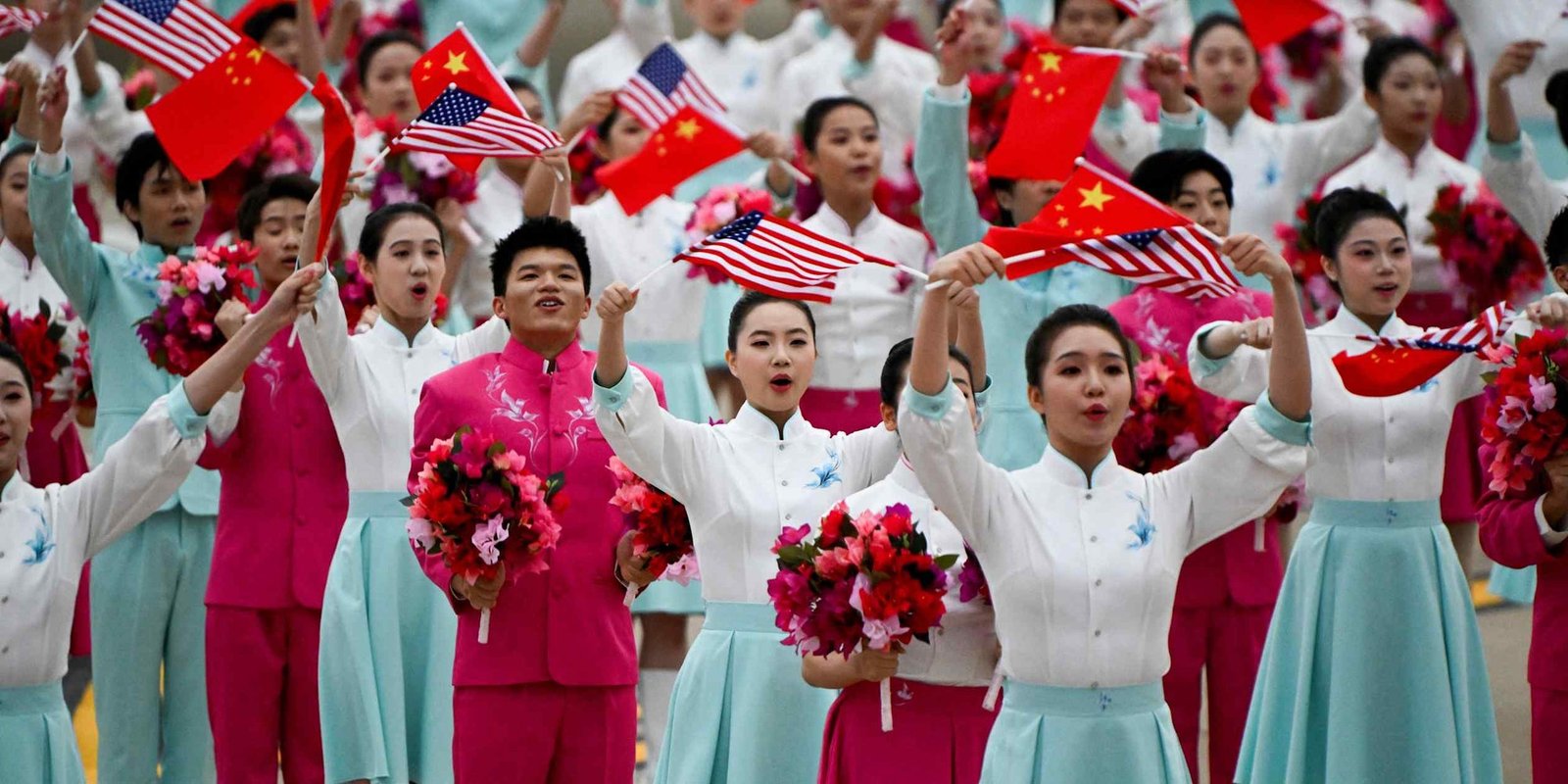
The interview took place against the backdrop of a welcoming ceremony for President Trump at Shenzhen airport on 18 November, where performers waved Chinese and American flags — a visual signal of the warmer ceremonial tone that has characterised this year’s engagement between the two governments.
AmCham China did not specify what institutional mechanisms it was calling for, but the thrust of its argument was that personal diplomacy between Trump and Xi, however active, is an insufficient substitute for agreed rules and predictable enforcement. The organisation represents American companies with significant commercial interests in China and has consistently advocated for a stable bilateral trade environment.
The remarks come as the year’s diplomatic calendar nears its close, with Trump and Xi having met multiple times in 2026 — a cadence that AmCham China acknowledged was historically significant but argued could not, on its own, deliver the structural stability that underpins long-term business confidence.