China’s Milk Glut Pushes Dairies Towards Adult Consumers as Birth Rate Falls
China’s milk glut forces Yili and Mengniu to target adults as birth rates decline. Explore how dairies adapt to demographic change and oversupply.
China is producing more milk than its population is consuming, forcing the country’s dairy industry to rethink its customer base as declining birth rates shrink the traditional market for infant and children’s products. Domestic giants Yili and Mengniu are responding by launching products aimed at adults, while Japan’s Meiji has chosen to exit the market altogether.
The strategic shift reflects a structural challenge for an industry that has long relied on a growing cohort of young consumers. With fewer children being born, dairies operating in China face the twin pressures of oversupply and shrinking demand in their core demographic, according to the source report.
Yili and Mengniu Target Older Consumers
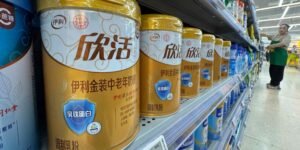
China’s two largest dairy companies, Yili and Mengniu, are moving to fill the gap by developing products specifically marketed at adult and older consumers. Yili’s powdered milk for older adults has already appeared on supermarket shelves in cities including Dalian, signalling that the pivot is under way rather than merely planned.
The companies’ efforts represent a deliberate attempt to reorient a sector that built much of its growth on infant formula and products aimed at children, segments that are directly exposed to China’s declining birth rate.
Meiji Withdraws from the Market
Japan’s Meiji has taken a different decision, opting to leave the Chinese dairy market entirely. The company’s exit underscores the difficulty foreign players face in adapting to structural shifts in Chinese consumer demand, particularly when competing against entrenched domestic brands with the scale and distribution networks to experiment with new product lines.
The contrast between the responses of local and foreign dairy companies illustrates the uneven capacity within the industry to absorb the impact of demographic change. Domestic players such as Yili and Mengniu can spread the cost of product development across large existing operations, whereas smaller or less-established foreign entrants face a starker commercial calculation.
China’s dairy sector is contending with a supply-demand imbalance that is adding urgency to the search for new consumer segments. Milk production in the country currently exceeds what consumers are purchasing, a situation that compresses margins and puts pressure on producers to either find new buyers or reduce output.
The adult nutrition segment, which includes products tailored to the elderly and to health-conscious working-age consumers, represents one of the more accessible avenues for growth given that it does not require dairy companies to build entirely new supply chains. Powdered milk for older adults, as already seen on shelves under the Yili brand, draws on existing manufacturing capabilities while addressing a demographic that is expanding as China ages.
Whether the pivot to adult consumers will be sufficient to offset the contraction in child-focused dairy sales remains an open question, but the moves by Yili and Mengniu indicate that China’s largest dairy producers are treating the demographic shift as a long-term structural reality rather than a temporary fluctuation.